

EXTRAS

Explore the real Northwest Indiana behind The Counterwritten—Cedar Lake, Crown Point, and the Region as they stood in 1979.
The Region, 1979

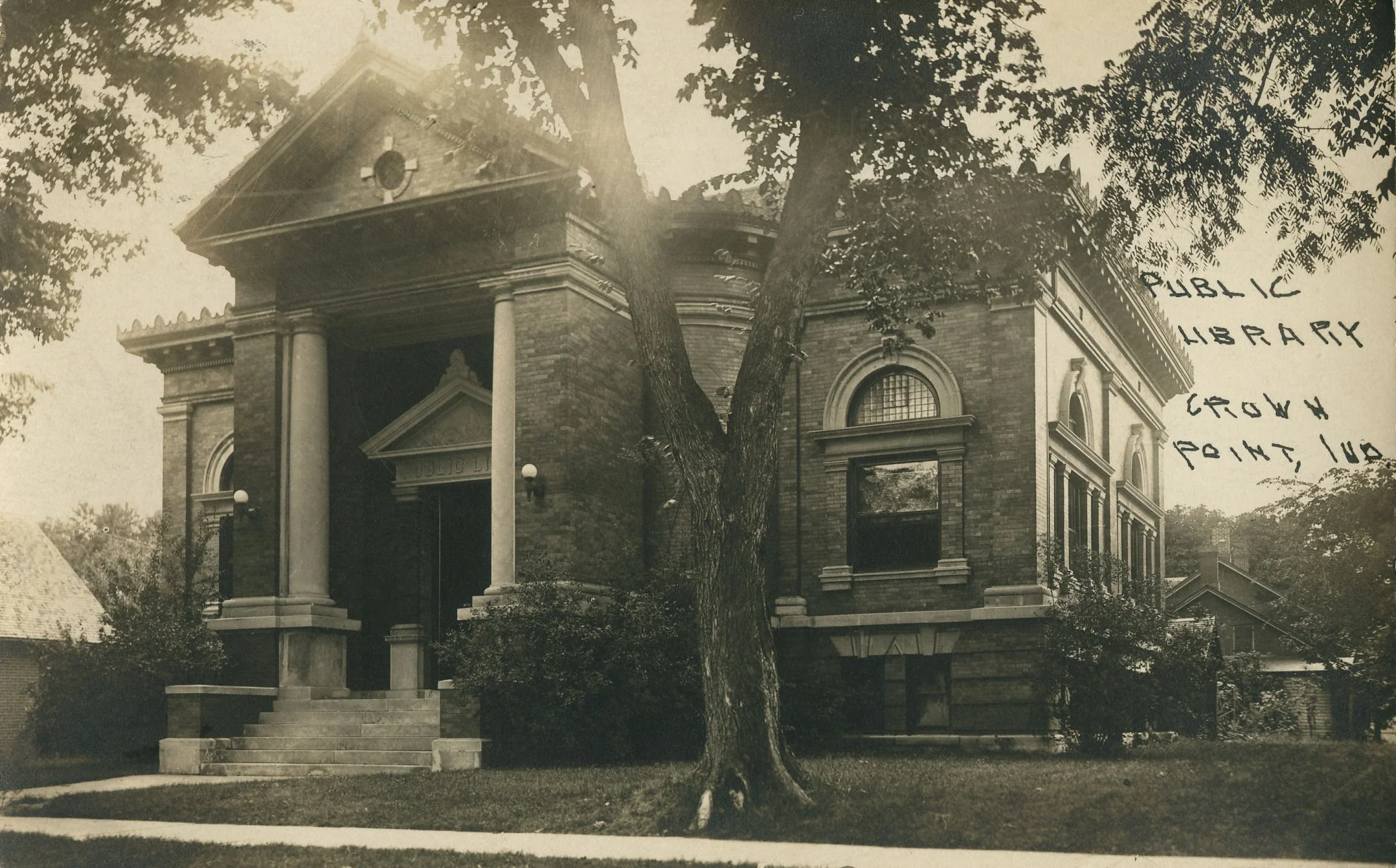
Crown Point Library, 1924 .Image courtesy of Steve Shook: https://www.flickr.com/photos/shookphotos/
Crown Point High School stood at 311 South Court Street, just south of the downtown Square. Built in 1911 on the site of the former South Ward grade school, it gave students a gymnasium, auditorium, and larger, better-lit classrooms. As enrollment grew, the school added portable buildings for manual training, band, and junior-high classes. When the new fourteen-acre high school on West Joliet Street opened in fall 1941, the South Court Street building ceased to serve as Crown Point’s high school. By 1982, it was known as the YMCA.
Crown Point High School, c. 1965
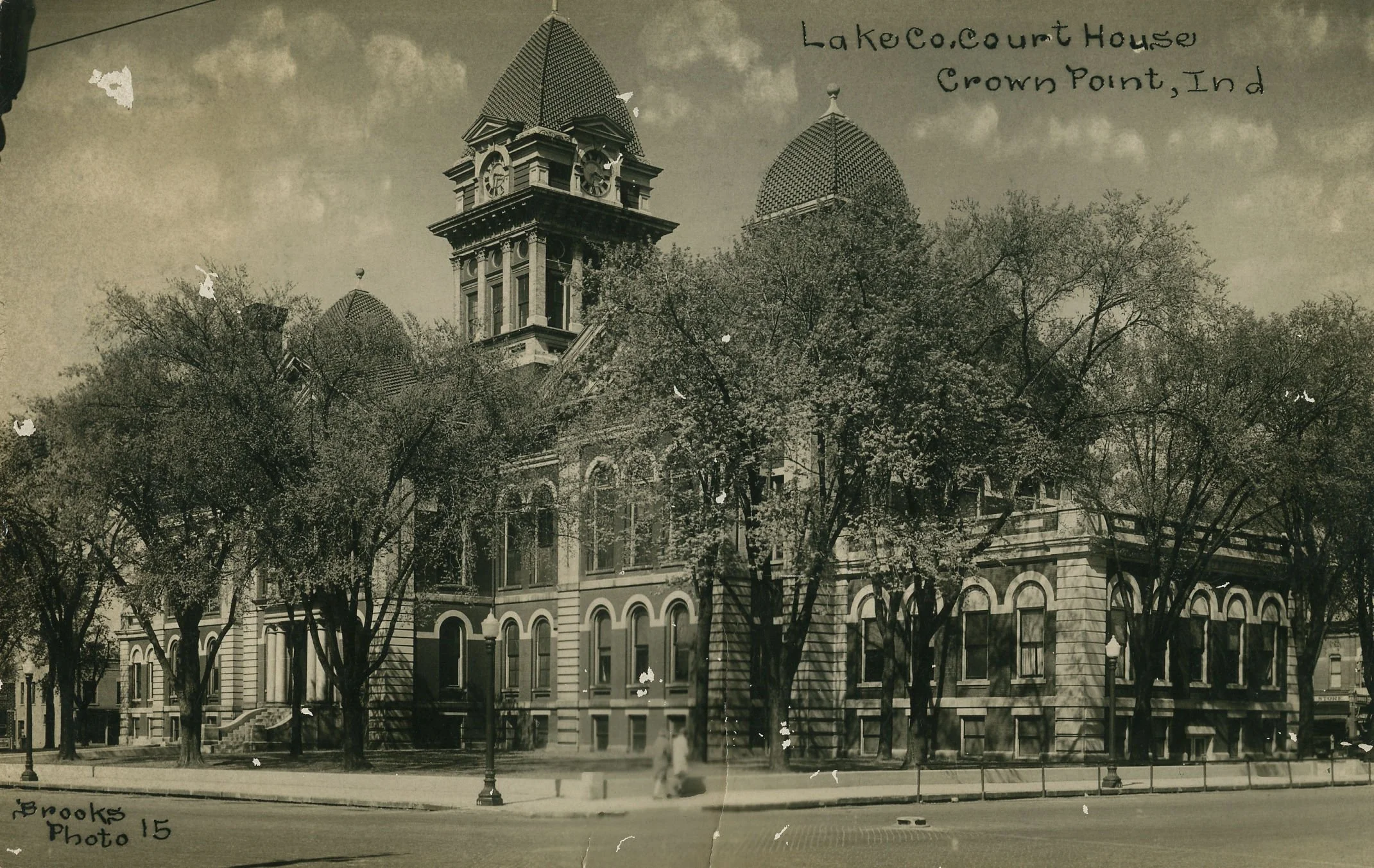
Lake County Courthouse, 1944 .Image courtesy of Steve Shook: https://www.flickr.com/photos/shookphotos/
By 1979, Crown Point’s civic center was changing without losing its past. Six years earlier, a new library facility had opened on Court Street beside the 1908 Carnegie building, which was renamed the Carnegie Center. In 1974, the Lake County Sheriff’s offices also moved from the old Sheriff’s House and Jail downtown to the new county government complex on North Main Street. The town was modernizing, while its most recognizable historic buildings remained part of daily life.
Crown Point, IN
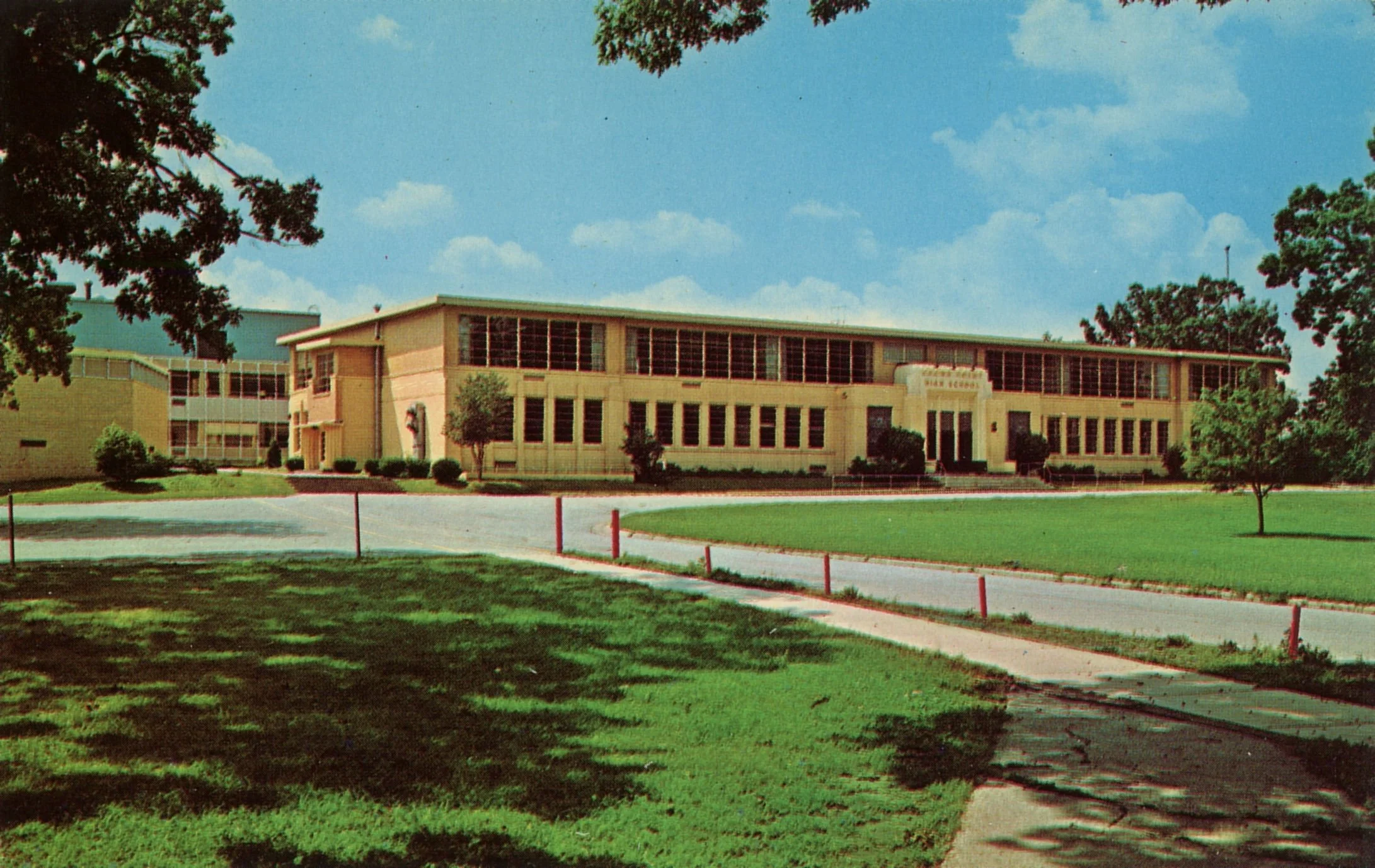
Crown Point Highschool, c.1965 .Image courtesy of Steve Shook: https://www.flickr.com/photos/shookphotos/
In the 1970s, the Old Lake County Courthouse changed from the county’s working government center into a landmark whose future depended on preservation. It was added to the National Register of Historic Places on May 17, 1973; county offices moved to the new Government Center in 1974. Rather than disappear from downtown life, the building’s basement shops opened in 1978, giving the old courthouse a new public role. By 1979, it remained the defining presence on Crown Point’s Square—no longer the center of county operations, but still central to the town’s identity.
Lake County Courthouse

Cedar Lake, IN
By 1979, Cedar Lake was no longer primarily the summer-resort community it had been before the Great Depression. It had incorporated as a town in 1967 and was becoming a year-round residential and commuter community, with many residents working in Chicago or the industrial communities of northern Lake County.
The population increased from 7,589 in 1970 to 8,754 in 1980, suggesting that Cedar Lake had roughly eight thousand residents near the end of the decade. The lake nevertheless remained central to local identity, and entertainment continued at places such as the Midway Ballroom, which survived until a fire destroyed it in 1987.
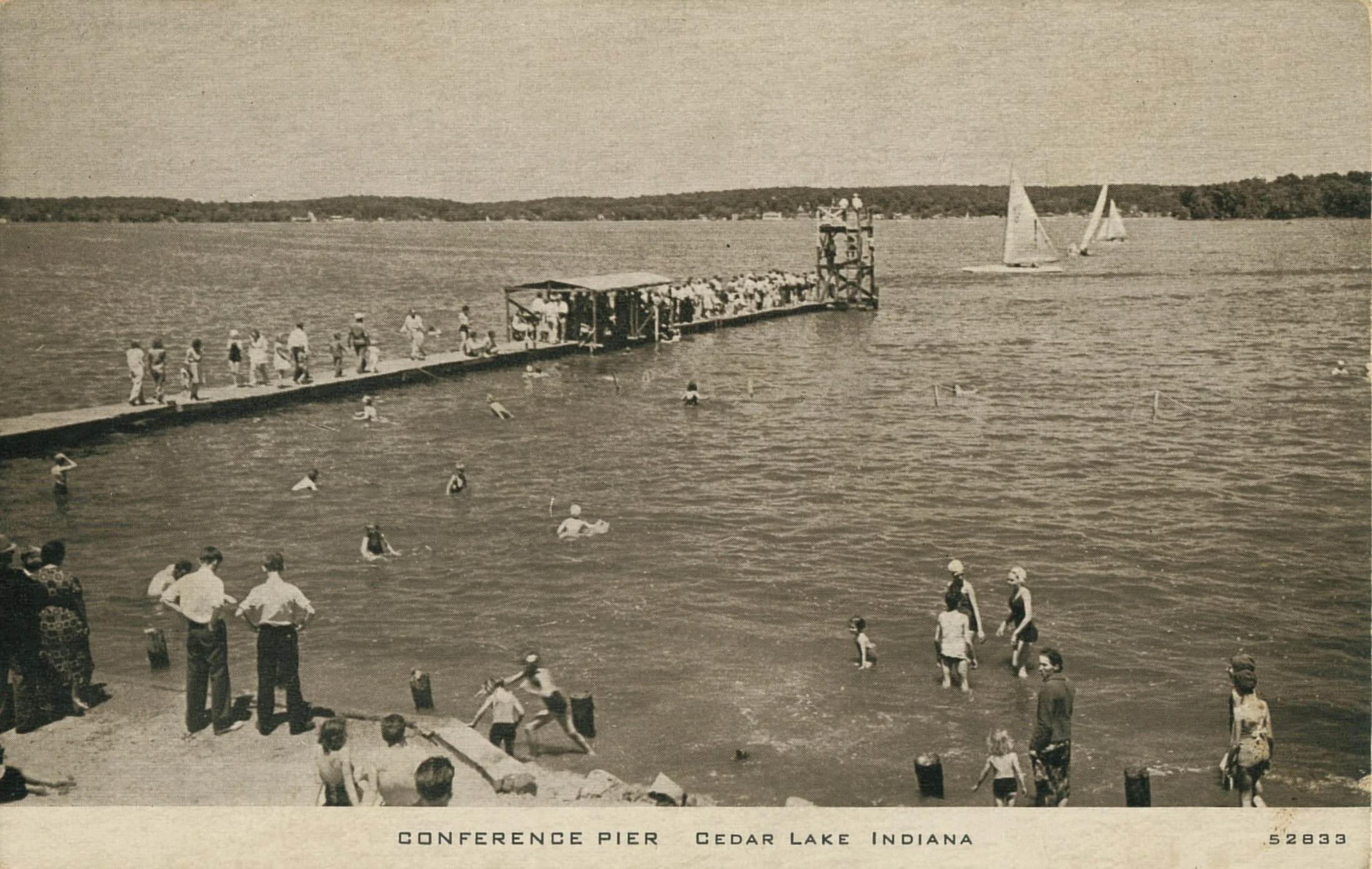
Cedar Lake, c.1945 .Image courtesy of Steve Shook:
https://www.flickr.com/photos/shookphotos/albums/72157622947801461/with/4215833386
Cedar Lake History
Cedar Lake began as a small settlement around the glacial lake once known as the Lake of the Red Cedars. Its transformation into a regional destination accelerated after the Monon Railroad reached the lake’s western shore in 1882. By the late nineteenth and early twentieth centuries, trains brought visitors from Chicago and across Northwest Indiana to a shoreline crowded with hotels, cottages, dance halls, restaurants and boat landings. Cedar Lake also supported a substantial ice-harvesting industry that supplied Chicago’s meatpacking and transportation businesses before mechanical refrigeration made the trade obsolete. Lassen’s Resort became one of the community’s best-known destinations, offering a hotel, dance pavilion, restaurant, saloon, beach and steamboat service for arriving travelers.
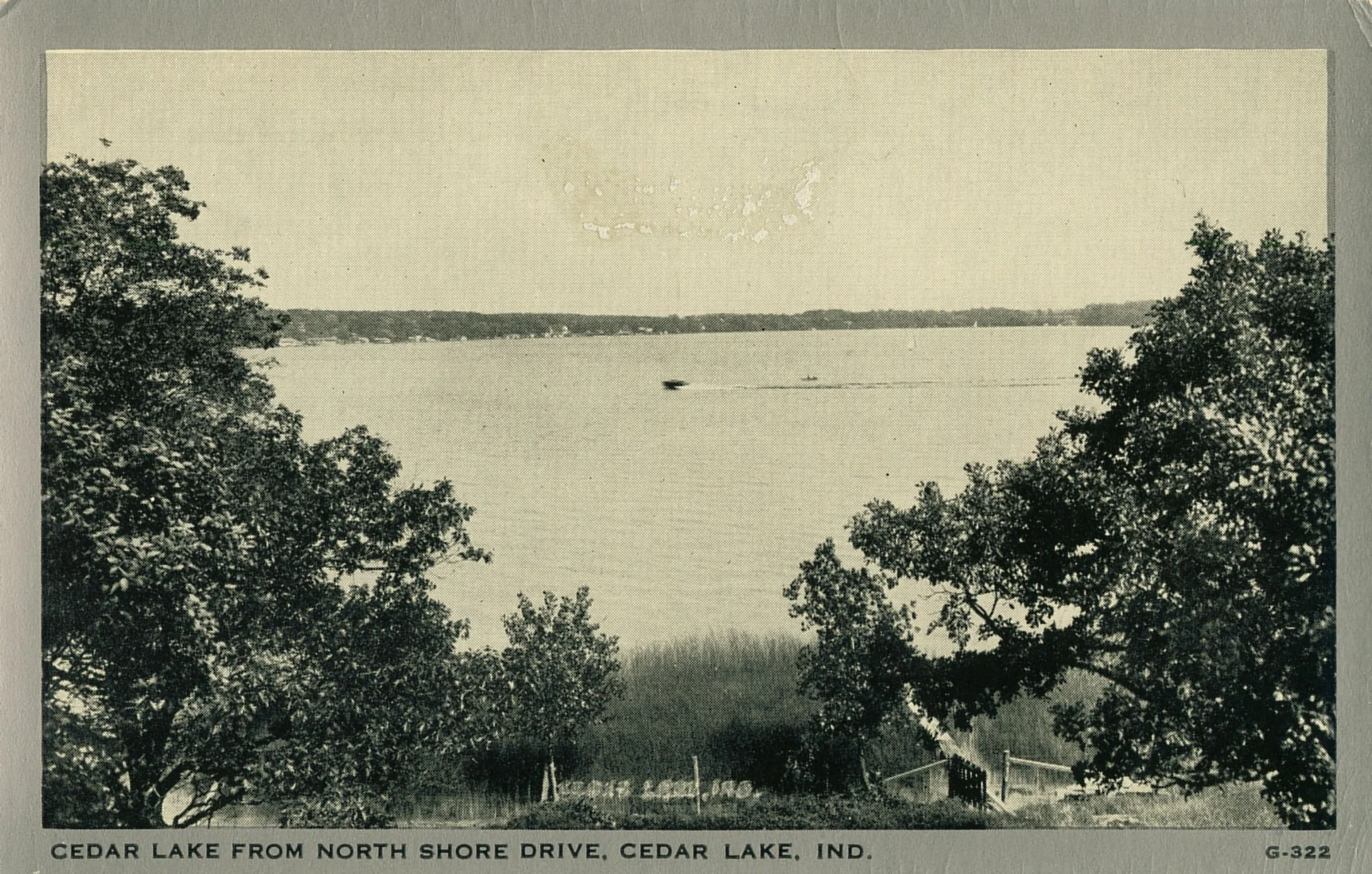
Cedar Lake, c.1945 .Image courtesy of Steve Shook:
https://www.flickr.com/photos/shookphotos/albums/72157622947801461/with/4215833386
Lassen Property
The community was also beginning to reconsider and preserve what remained of its resort-era past. In 1977, the former Lassen property was sold to the Town of Cedar Lake for municipal offices, including a town hall and police station. That same year, local residents formed the Cedar Lake Historical Association to prevent the deteriorating Lassen Hotel from being demolished. In 1979, therefore, the building had not yet become the Lake of the Red Cedars Museum—it would open in that role in 1986—but it already represented a visible remnant of an earlier Cedar Lake: a resort town of excursion trains, crowded dance pavilions, summer cottages and steamboats.
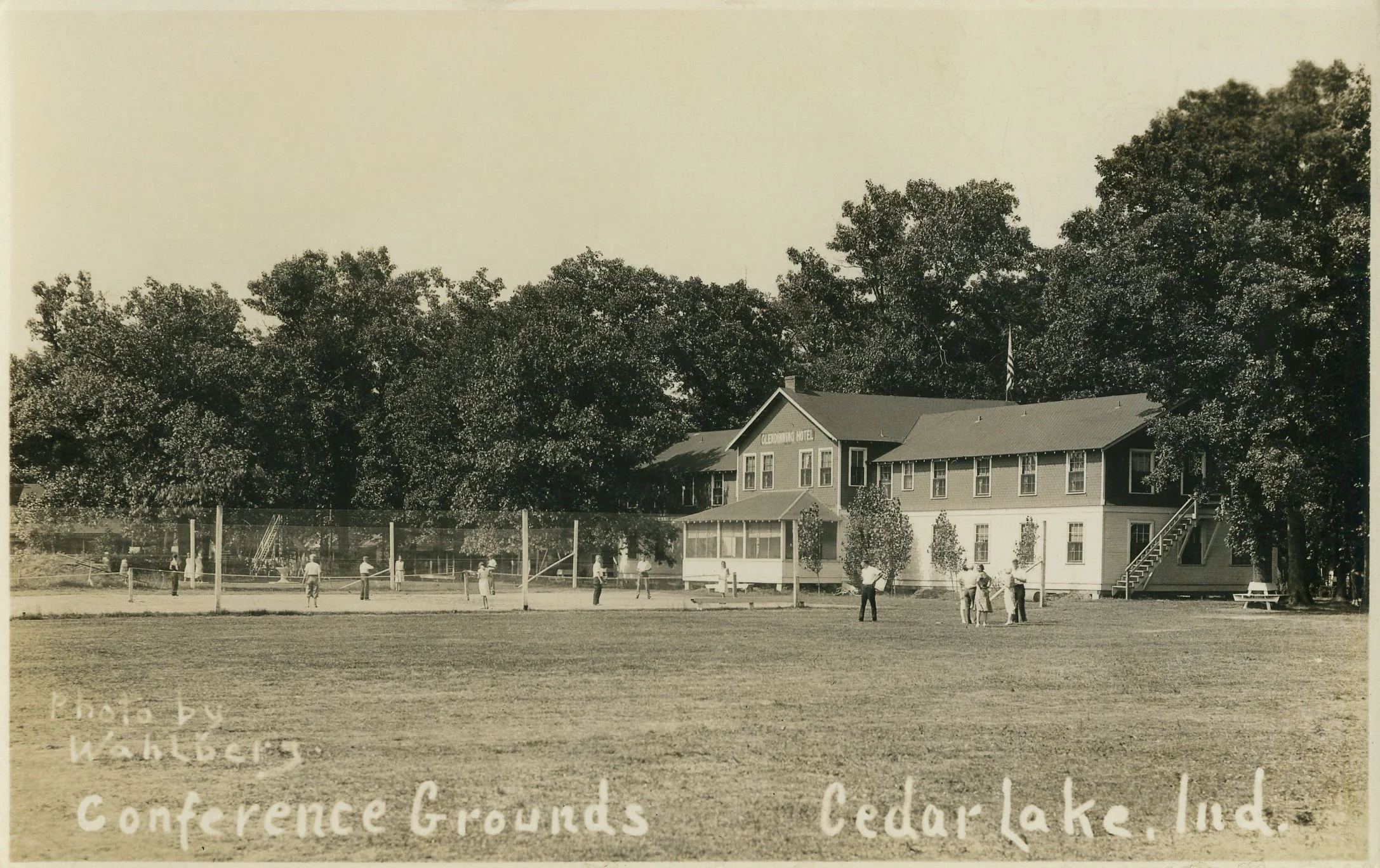

THE SROUD OF CROWN POINT • BOOK ONE
The Counterwritten
Some stories are written. Others are waiting to rewrite you.
In 1979, in Crown Point, Indiana, four teenagers uncover a missing story buried beneath their town’s quiet surface—one that connects their lives in ways they could never imagine.
The past is not past. And the story is far from finished.